New Horizons for Geohazard Impact Mitigation in the Mediterranean
Scientific conference of the joint project MULTI-MAREX brings together researchers and stakeholders to improve coastal resilience in Kalamata.
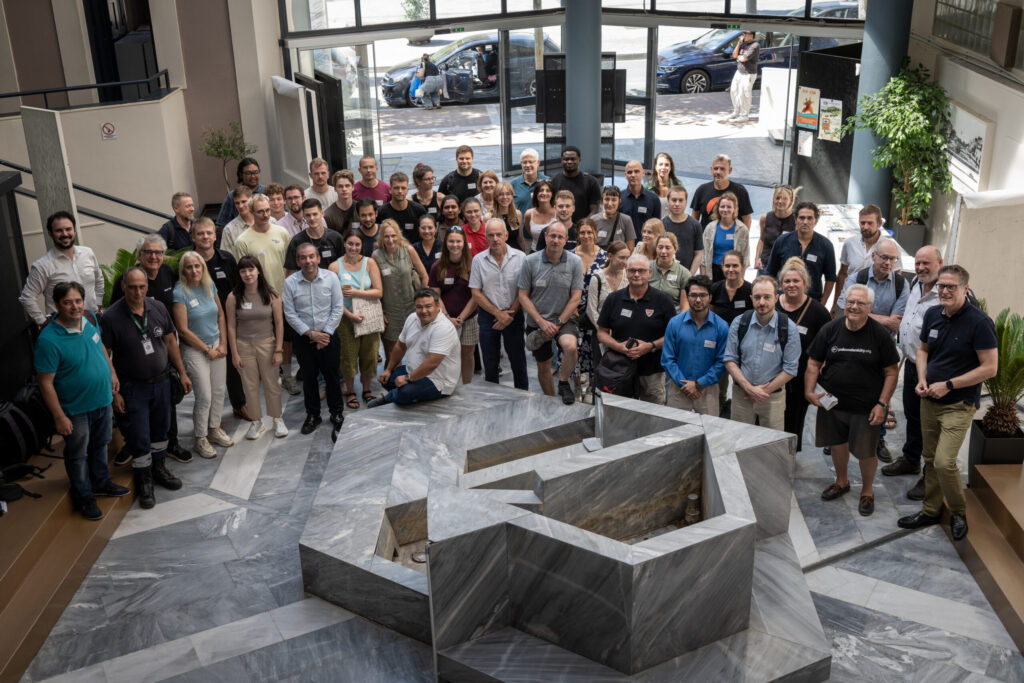
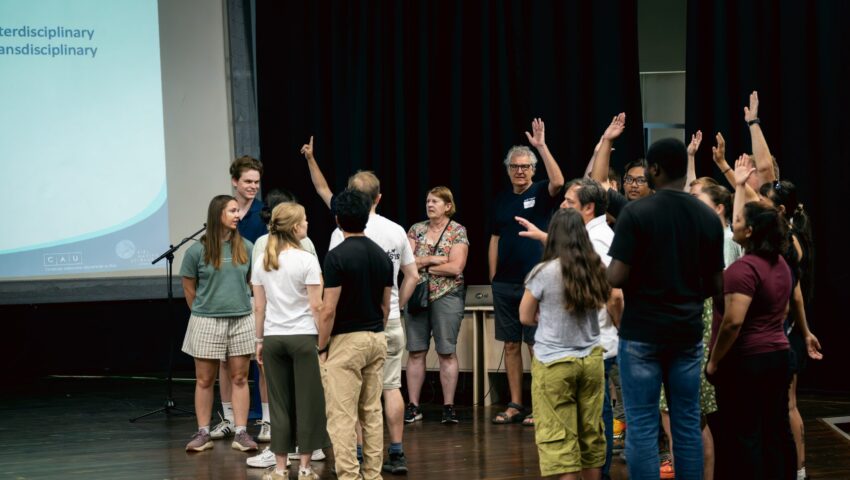
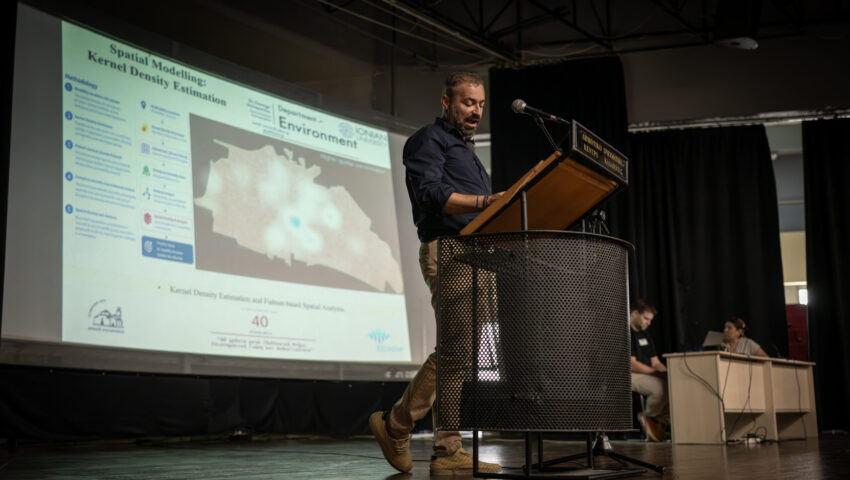
On the occasion of the 40th anniversary of the Kalamata earthquake, approximately 32 researchers and students from Greece and Germany convened in the Greek coastal city from 12 to 18 September as part of MULTI-MAREX — a joint project within the third DAM research mission mareXtreme. Together with local stakeholders, they discussed measures to minimise impacts and build resilience against marine extreme events such as earthquakes, landslides and the tsunamis they can trigger. On 13 September 1986, an earthquake of magnitude 6.2 (on the Richter scale) devastated large parts of the city within 31 seconds: at least 20 people died and hundreds were injured.
The conference week opened with an official press conference on 11 September, during which Prof. Klaus Reicherter (head of delegation, RWTH Aachen) highlighted the warm welcome extended by the city of Kalamata for the collaboration, and welcomed the participation of a large number of researchers and diverse stakeholder groups. Prof. Torsten Schlurmann (mission spokesperson and DAM board member, Leibniz University Hannover) added that the intensive exchange of experiences with eyewitnesses, the accompanying cultural events, and the disaster relief exercises had been particularly impressive. Prof. Piero Bellanova (sub-project lead and organiser, University of Oldenburg) emphasised that the conference week had also provided a platform for early-career researchers.
At the heart of the seven-day conference week and an associated living lab workshop was the question of how local resilience to such extreme events in the Mediterranean region could be sustainably strengthened — from scientific hazard assessment to the concrete implementation of scientific findings for adaptation to natural hazards, with the city of Kalamata as a living lab. The role model for this goal is the Greek island of Samos, which has already been recognised as “Tsunami Ready” under the Tsunami Ready Recognition Programme of the Intergovernmental Oceanographic Commission of UNESCO (IOC-UNESCO). The coastal city of Kalamata is also to be certified under this voluntary but important programme in the future — with the aim of sustainably improving early warning information, evacuation plans, and public awareness for a potential tsunami.
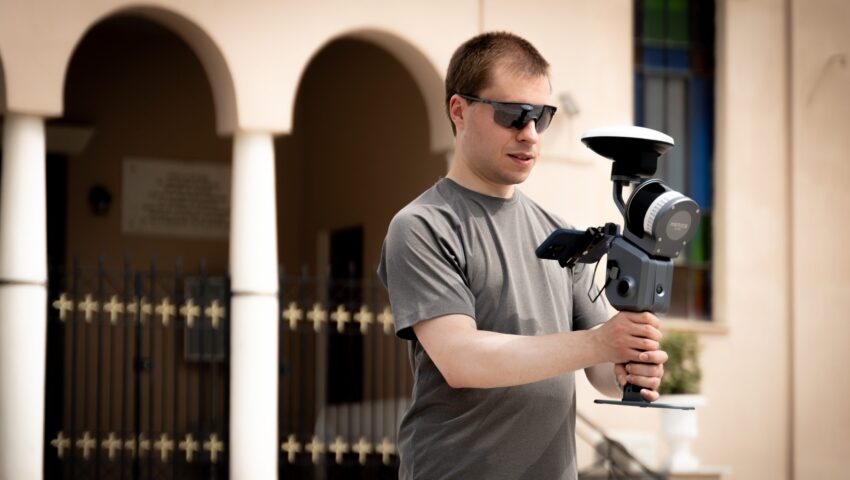
In addition to the conference, numerous measurements were taken and a wide range of data collected across the city of Kalamata. These included the sampling of sediment archives as well as the recording of urban infrastructure through the mapping of building data, population density, mobility patterns and land-use information. This work was complemented by high-resolution laser scans of particularly exposed locations within the city. This data feeds into the multidisciplinary assessment of the hazard situation and into the refinement of predictive models.
About MULTI-MAREX
Within the MULTI-MAREX joint project, approximately 39 researchers from 12 institutions in interdisciplinary marine and coastal research are working together with local stakeholder groups and decision-makers from Greece to develop improved action and forecasting capabilities for multiple geo-marine extreme events. The joint project is coordinated by GEOMAR Helmholtz Centre for Ocean Research Kiel.
About mareXtreme
In the third DAM research mission ”Paths to Improved Risk Management in the Area of Marine Extreme Events and Natural Hazards”, abbreviated as mareXtreme, approximately 150 researchers from 29 partner organisations are studying how to manage the interactions between short-term multiple and cascading extreme events and natural hazards, as well as their long-term impacts on marine ecosystems and coastal communities. These include, for example, flooding and storm surges, earthquake-triggered tsunamis, and the increased proliferation of microorganisms harmful to humans and animals. Socio-political framework conditions are an integral component of the mission’s research activities.
The mission’s goal is to significantly improve the predictability of marine extreme events and natural hazards, to support the sustainable development of coastal communities, and to strengthen societal resilience in coastal regions.
The mareXtreme mission is funded by the German Federal Ministry of Research, Technology and Space (BMFTR) as well as the science ministries of the northern German federal states of Bremen, Hamburg, Mecklenburg-Vorpommern, Lower Saxony and Schleswig-Holstein.
DAM-Newsletter
Always up to date with the DAM newsletter. (German only)
Our Sponsors
The federal government and the governments of the five northern German states support the current development and sponsor the DAM.