Underway Data: "Marine Data – Research Vessels"
standardised, openly accessible and FAIR
The climate crisis, growing hostility towards science and digital disinformation require robust, transparent research data – especially in marine sciences, which are essential for understanding the global climate. The German government has recognised the importance of open, interoperable data infrastructures and digital spaces, particularly in the field of marine research. This is evident, for example, in the Underway research data project.
The “Marine Data – Research Vessels” Project
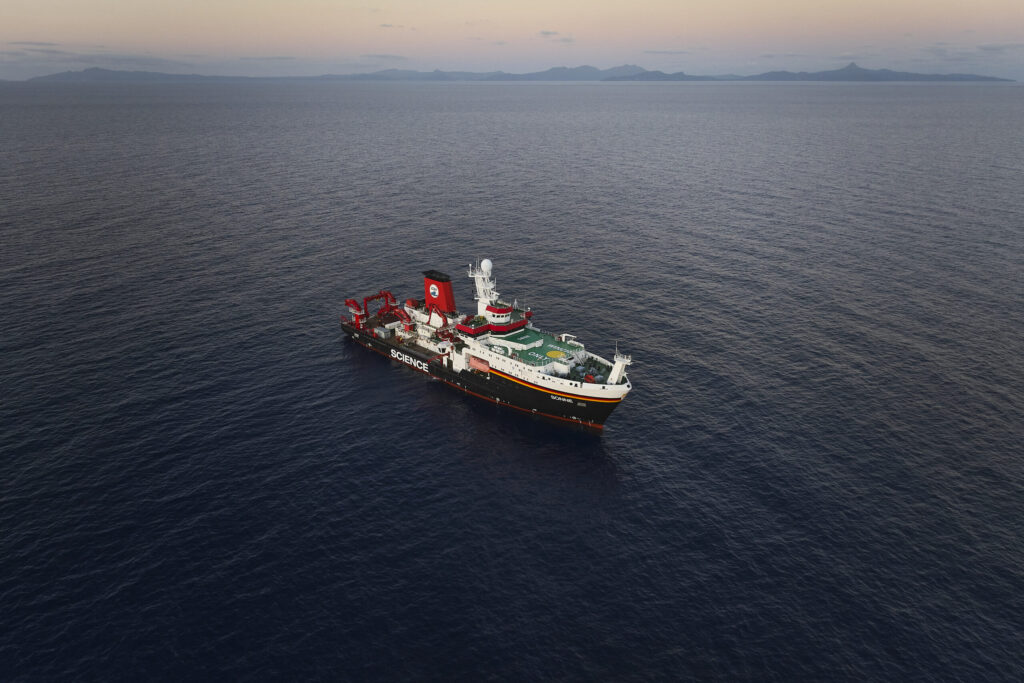
Using permanently installed sensors, research vessels continuously deliver high-quality and valuable data on (geo)physical, chemical and biogeochemical parameters during their voyages – even from regions that are difficult to access. These so-called underway data are central to global ocean observation, weather forecasting and climate modelling. The “Marine Data – Research Vessels” project makes the data from German research vessels permanently accessible to the public in accordance with FAIR criteria (Findable, Accessible, Interoperable, Reusable) and to links them internationally.
The aim is to secure and expand the data flow in the long term. Technologically pioneering aspects include the establishment of automated data and metadata flows, AI-supported evaluations and digital innovations on board (e.g. remote access to sensor systems). The project has been funded by the Federal Ministry of Education and Research since 2021 and is coordinated by the DAM in the area of data management and digitisation.
Research data
Underway research data is crucial for understanding and modelling ocean-atmosphere processes, improving forecasts and validating remote sensing data. It contributes to the development of climate models and the monitoring of environmental changes such as ocean acidification and warming. Knowledge of the shape of the sea floor (bathymetry) is fundamental, for example, to understanding natural processes such as ocean currents and sediment transport or environmental change. Bathymetry is also central to resource management, tsunami prediction and the laying of cables and pipelines. In addition, bathymetry data usually form the basis for maps used in research expeditions by German research vessels and therefore play a central role in voyage planning.
Results
The focus is on data from permanently installed sensors such as ADCP, CTD, multibeam echo sounders, ferry boxes, thermosalinographs and fluorometers. The central aim of the project is to publish and visualise this data for user-friendly retrieval and reuse by the scientific community. To this end, workflows and standards for data transfer and archiving have been implemented across institutes and through the shared use of distributed data infrastructures. Data infrastructures on board ships and on land have been modernised and the handling of sensor data harmonised across institutes. In addition, the project ensures the systematic international connection of data to international Earth observation systems.
The data is now processed according to FAIR and open science principles and published and integrated in (inter)national infrastructures such as PANGAEA, the German Marine Research Data Portal, GEBCO and Copernicus.

Project management
Projektpartner
- Alfred Wegener Institute Helmholtz Centre for Polar and Marine Research (AWI)
- Federal Maritime and Hydrographic Agency (BSH)
- Christian Albrecht University of Kiel (CAU)
- GEOMAR Helmholtz Centre for Ocean Research Kiel (GEOMAR)
- Helmholtz Centre Hereon (Hereon)
- Institute for Chemistry and Biology of the Marine Environment (ICBM)
- Leibniz Institute for Baltic Sea Research Warnemünde (IOW)
- MARUM – Centre for Marine Environmental Sciences, University of Bremen (MARUM)
- Max Planck Institute for Chemistry (MPI-C)
Our Sponsors
The federal government and the governments of the five northern German states support the current development and sponsor the DAM.