Ships, data, talents
New overviews of German marine research on the DAM information portal Ocean Online
How does marine research work? What types of research vessels are there, and what does a ship expedition involve? What opportunities are there for young people? Answers to these questions and many other insights into marine science are provided in the new content in the ‘Research’ section of OceanOnline, the DAM’s information portal. The portal also offers new articles on marine biodiversity and ecosystem changes, the concept of planetary boundaries, and the environmental status and oxygen depletion in the Baltic Sea.
Interdisciplinary research and the search for solutions
Anyone who wants to understand the climate and our natural resources on Earth must study the oceans. They cover two-thirds of the Earth’s surface and have an immense influence on the lives of all humans, animals and plants. In German marine research, numerous experts work daily to expand our knowledge of marine habitats and material cycles and to understand the diverse influences humans have on the oceans.
German marine research is particularly notable for its approach to the numerous issues relating to coasts, seas and oceans, which it does not address in isolation but always considers in an interdisciplinary context – always with a view to finding possible solutions to the pressing challenges of our time: climate change, species loss, environmental pollution, resource depletion and social upheaval.
Wide range of high-tech equipment
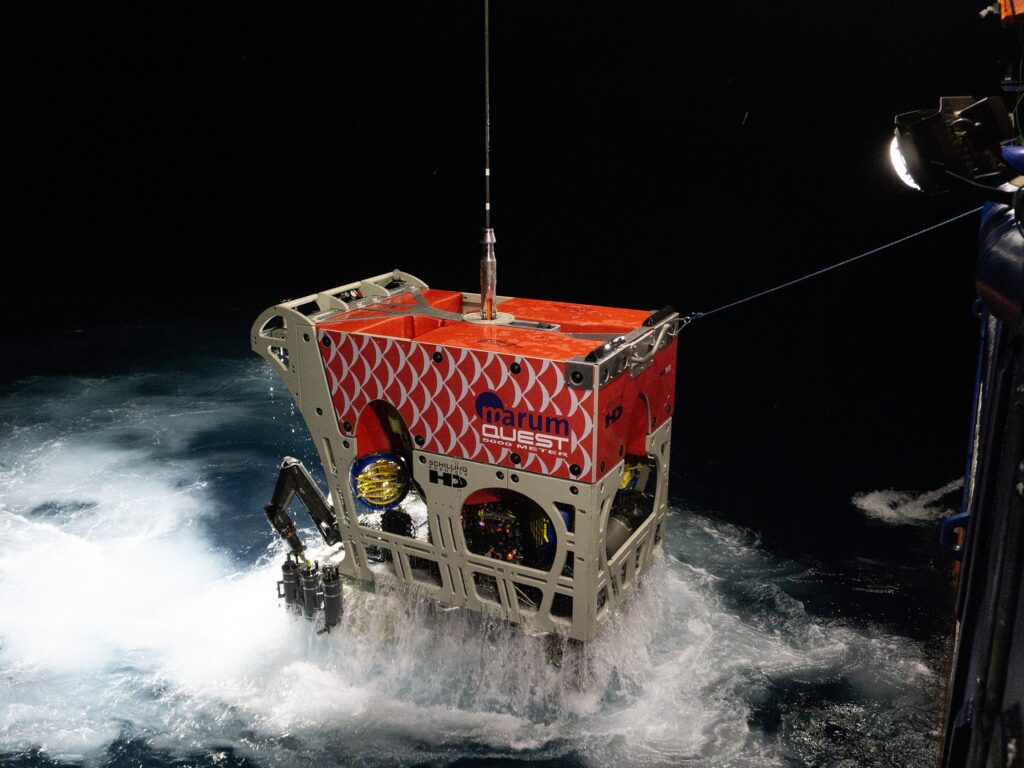
Excellent equipment is available for this purpose. For example, the Federal Ministry of Research funds and coordinates seven large, ocean-going research vessels. In addition, there are more than 15 other research vessels that are used regionally in the North Sea and Baltic Sea. Countless marine data are collected during these voyages. Deep-sea robots reveal the dark world thousands of metres below the water’s surface, sensors record the salinity, temperature and pH of the water, and drill cores are extracted from the seabed, telling us a great deal about the climate of past centuries and millennia.
However, the main work takes place on land – in the laboratories. Marine research facilities in Germany have an excellent infrastructure and a wide range of versatile, powerful research equipment: high-tech microscopes, for example, provide insights into molecular worlds. Mass spectrometers and gas chromatographs make it possible to examine and separate complex mixtures of substances. The force of currents and waves is simulated in a wave flume, and marine environments are recreated in aquariums to analyse the influence of various parameters.
Many training and education opportunities
But all this equipment is useless without people to use, operate and develop it for their research. Today as well as tomorrow. Supporting young scientists (early careers) is therefore another important focus of German marine research. There are already many opportunities for schools to immerse classes in the marine world at one of the numerous student laboratories. Students can choose from numerous marine-related degree programmes, trainees can find exciting careers, and doctoral students and postdocs can further develop their scientific careers in an excellent research environment. The MeereOnline information portal offers a comprehensive overview of the opportunities offered by marine research institutions with direct links to the respective details.
New focus topics: Baltic Sea, biodiversity and planetary boundaries
OceanOnline offers various new articles on current challenges facing the marine environment, including a focus on the concept of ‘planetary boundaries’, which provides guidelines for the use of our planet’s natural resources, to which the oceans contribute significantly. Another article focuses on the Baltic Sea and shows how oxygen depletion occurs in this inland sea and what consequences it has. There are also two new articles on biodiversity: one focuses on the spread of non-native species and how this may affect biodiversity and ecosystem services, while another highlights the importance of genetic diversity in marine ecosystems. All articles provide both an overview and further links on the topics.
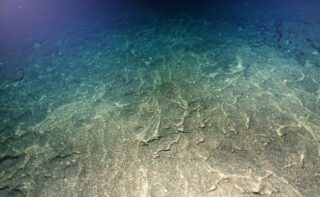
Header picture: MARUM / M. Schröder

Newsletter
Always up to date with the DAM newsletter. (German only)
Our Sponsors
The federal government and the governments of the five northern German states support the current development and sponsor the DAM.