United Nations BBNJ Agreement: Milestone for marine biodiversity
The DAM welcomes and supports the United Nations framework agreement for greater marine protection in international waters.
A milestone in global marine conservation: after around 20 years of international negotiations, the United Nations BBNJ Agreement – full title: United Nations Agreement on Marine Biological Diversity of Areas beyond National Jurisdiction – will come into force on January 17, 2026. The agreement is the first internationally binding treaty under international law to protect biodiversity in the high seas, which cover around two-thirds of the world’s oceans.
The German Marine Research Alliance (DAM) welcomes the entry into force of the BBNJ Agreement:
“This is a historic breakthrough for the global protection and sustainable use of marine biodiversity in the high seas. The DAM fully supports the objectives of the agreement in line with its guiding principle “We strengthen the sustainable management of coasts, seas and oceans”,‘ says the DAM Executive Board. ’The decisive factor now is how the agreement is implemented nationally in order to achieve a sustainable and effective improvement while also strengthening marine research.” Science develops practical knowledge for a more sustainable approach to the ocean – as a basis for well-founded, sustainable decisions in politics and society.
Scope, objectives and limitations of the UN Convention on the Protection of the High Seas
Around 64 per cent of the world’s ocean area is not administered by individual states but lies far from the coast – beyond the national 200-nautical-mile zones – in the high seas. The term “high seas” refers “only” to the body of water in international waters. Different jurisdictions apply to the seabed and subsoil.
In many places, human intervention in these international waters has been largely unregulated to date. As a result, marine protection requirements have been inadequately implemented. The UN BBNJ Agreement aims to change this.
The objectives of the BBNJ Agreement are, in particular
- to halt the loss of biodiversity,
- to restore and maintain the health of the oceans, and
- to promote global justice in the management of marine resources.
The BBNJ Agreement allows signatory states to establish marine protected areas on the high seas and sets out regulations on how areas can be placed under protection – in the event of a dispute, even by a vote of the UN member states. Three-quarters of all votes are sufficient. In this way, it should still be possible to protect and sustainably use at least 30 percent of the ocean area by 2030 through protected areas and other measures. Currently, less than one percent of the high seas are protected.
However, implementing marine protected areas requires a great deal of detailed consultation, particularly with regional fisheries organisations and representatives of regional marine agreements. In addition, a great deal of money is needed: according to one estimate, the professional planning, implementation and monitoring of marine protected areas covering 30 percent of the high seas will cost around seven billion US dollars – plus a further billion US dollars in operating costs per year.
Signing and ratification process
The official text of the BBNJ Agreement has been available for signing at the United Nations in New York since September 20, 2023. The Federal Republic of Germany was one of a total of 68 states that signed the new agreement on the very first day. By signing, the states confirm their intention to initiate the national ratification process and their willingness to be bound by the treaty at a later date. Legal obligations only arise once the official accession process, known as ratification, has been completed.
The ratification process itself varies from country to country. Two laws are required for Germany to accede: a treaty law and an implementation law, the drafts of which were passed by the Federal Cabinet in December 2025. At the end of the national ratification process, an official document will be drawn up, signed by the President of Germany and then officially deposited with the United Nations in New York.
As of September 19, 2025, the ratification documents of 60 states have been submitted – the minimum requirement for the agreement to enter into force. 120 days later, the treaty will officially enter into force and become binding on the ratifying states. As of today, 145 states have signed the UN High Seas Protection Agreement. 83 of them have already completed the ratification process.
FURTHER INFORMATION
- on the UN High Seas Protection Agreement and protected areas for coasts and oceans in general can be found on the MeereOnline information portal.
- The current status of signatures and ratifications can be viewed in the United Nations Treaty Collection.
- Press release from the Federal Environment Ministry dated December 3, 2025 on Germany’s activities in the ratification process.
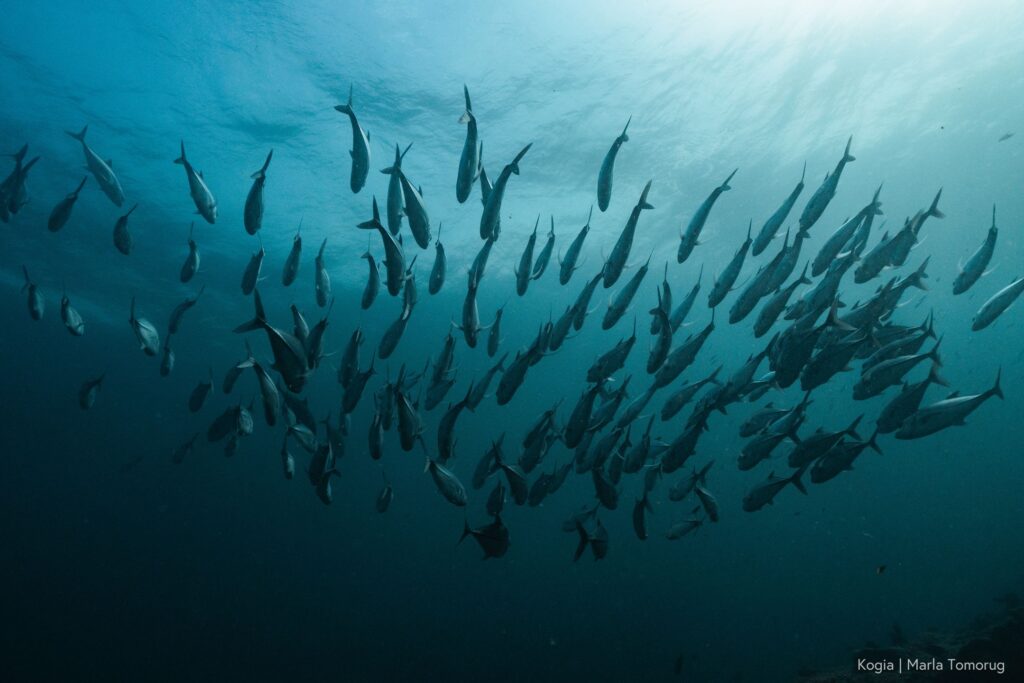
Header picture: Maria Tomorug | Kogia


Newsletter
Always up to date with the DAM newsletter. (German only)
Our Sponsors
The federal government and the governments of the five northern German states support the current development and sponsor the DAM.