World Ocean Review on marine biodiversity published
The ninth edition of the free marine science series summarises the latest research findings on ocean biodiversity.
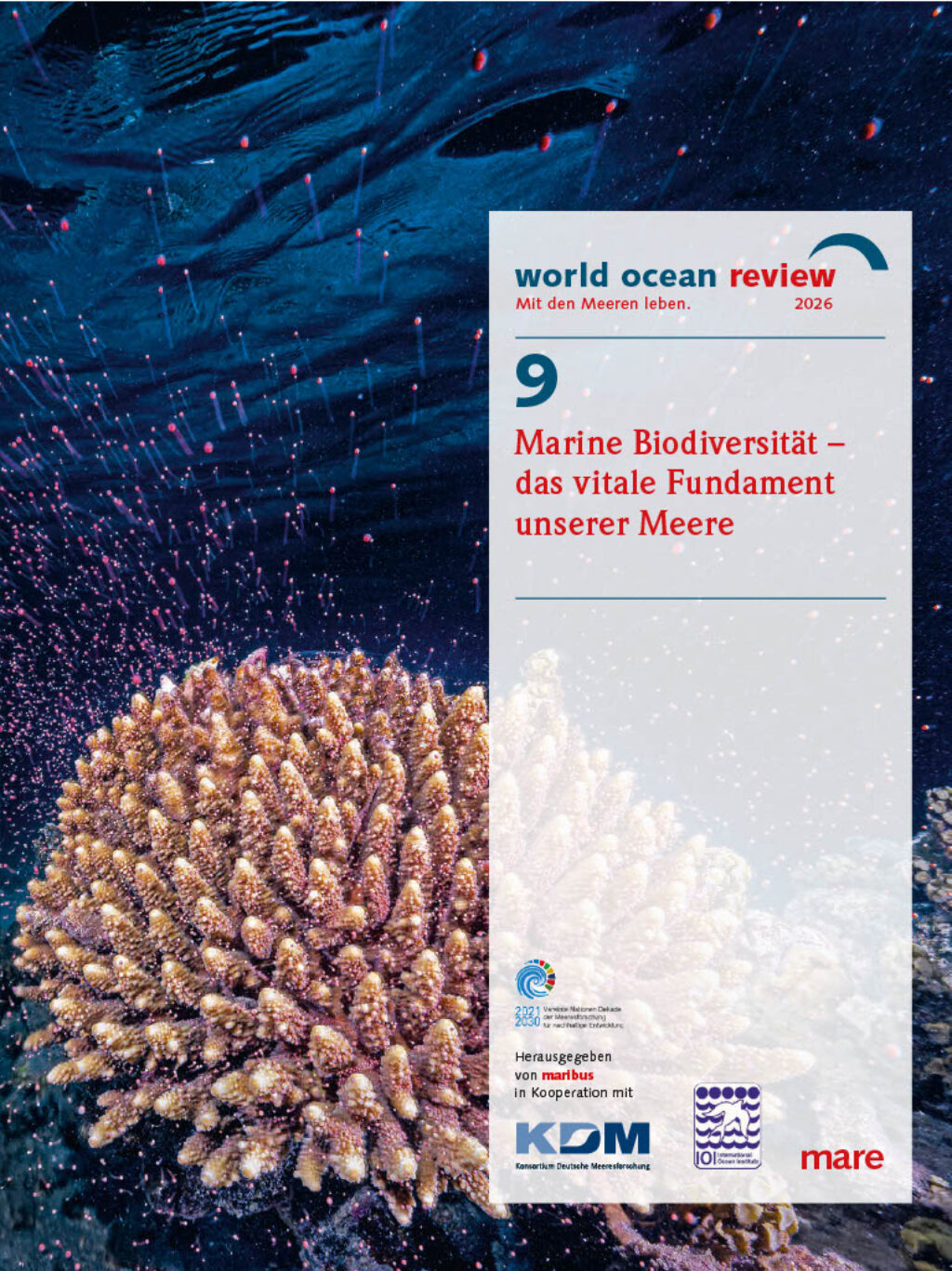
A few weeks before the UN High Seas Protection Agreement officially comes into force in January 2026, the ninth edition of the free marine science series ‘World Ocean Review’ (WOR) has been published in Germany. Entitled ‘Marine Biodiversity – the Vital Foundation of our Oceans’, the compendium provides key facts, stories and background information from marine research on the biodiversity of the oceans – ranging from the genetic differences between individual species to questions about how life is distributed in the sea and how it serves us humans, to the effectiveness of marine conservation policy and the different values that people associate with the ocean and its communities.
Which species live in the sea and which environmental factors determine their distribution or the size of their habitat? Why is the biodiversity of the ocean declining and how can it be successfully protected? WOR 9 provides answers to questions such as these, offering a wealth of knowledge from marine research as a basis for political and social decisions on the sustainable management of coasts, seas and oceans. “Biodiversity is complex. Yet those responsible in politics and business often consider only a few, largely market-based values of nature. Accordingly, their decisions, which lead to overfishing, pollution and warming of the oceans, among other things, are at the expense of future generations,” writes marine biologist Ulrich Bathmann, chairman of the German Marine Research Consortium (KDM) and member of the DAM executive board, in his foreword. ‘Our knowledge, summarised in the new “World Ocean Review”, should help us develop more reverence for the largest habitat on Earth.’
The WOR makes complex biodiversity issues understandable
The new edition of the WOR gently introduces its readers to the abstract topic of marine biodiversity and presents examples, figures, important definitions and many current research findings on the patterns and mechanisms of life in the sea. The new WOR explains the role of new scientific tools such as metabarcoding and artificial intelligence in a concise and understandable way, as well as the mutually reinforcing effects of the many drivers of species decline.
At the same time, WOR 9 conveys hope. The compendium shows that we as a society have long known how to effectively preserve and sustainably use marine life and its many functions. Its message: we still have it in our power to restore damaged marine habitats on a large scale within the next 25 years. The new WOR describes in several chapters how we can achieve this vital turnaround in our treatment of the ocean. The ocean is considered healthy and resilient when its communities are home to a wide variety of species that differ in their genetic makeup, appearance, characteristics and functions. Understanding the importance of this diversity for us humans is the first step towards preserving it. The new World Ocean Review paves the way for this.
The World Ocean Review is published every two years in German and English and is read worldwide by interested parties from politics, business and civil society. It provides up-to-date background information on relevant marine issues and is aimed at anyone who wants to have a say in marine conservation and use.
DOWNLOAD of THE GERMAN EDITION
The German edition of the ninth WOR, entitled ‘Marine Biodiversity – the Vital Foundation of our Oceans’, can be ordered free of charge as a printed copy or downloaded as a PDF version from the website worldoceanreview.com. An English version is currently in preparation.
Header photo/cover photo WOR 9: Dr Tom Shlesinger


Newsletter
Always up to date with the DAM newsletter. (German only)
Our Sponsors
The federal government and the governments of the five northern German states support the current development and sponsor the DAM.