Offshore Wind Energy and Marine Ecosystems: Scientific Perspectives in the German Bundestag
Parliamentary Breakfast Hosted by DAM, the DAM Research Mission sustainMare, and BMFTR
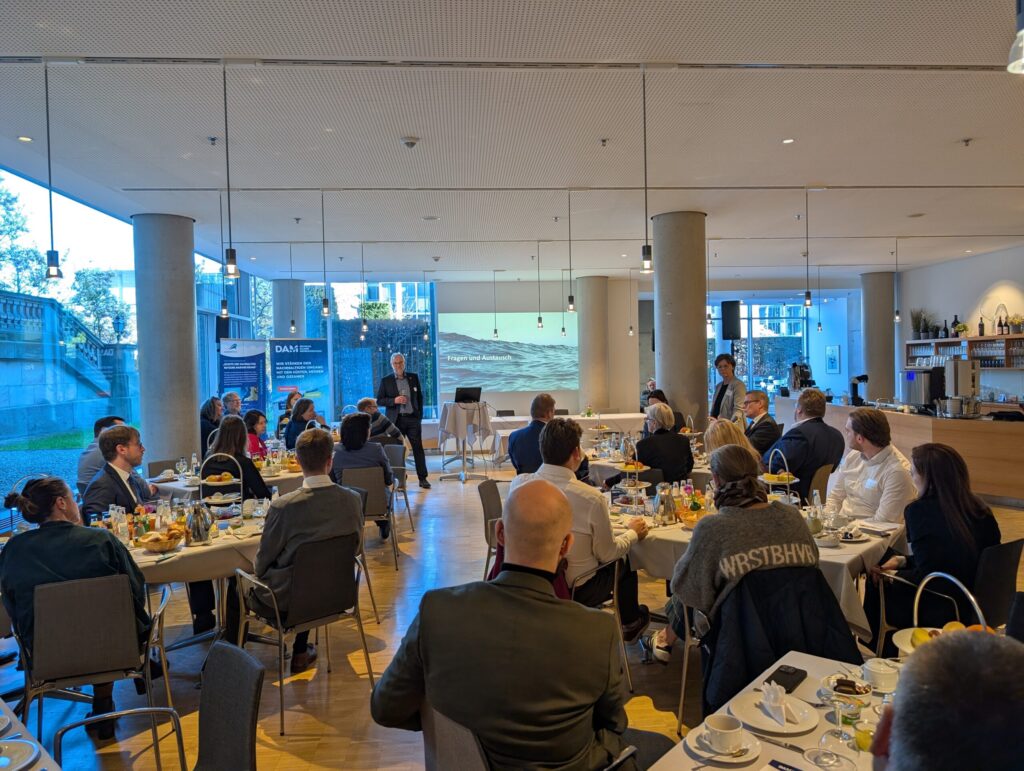
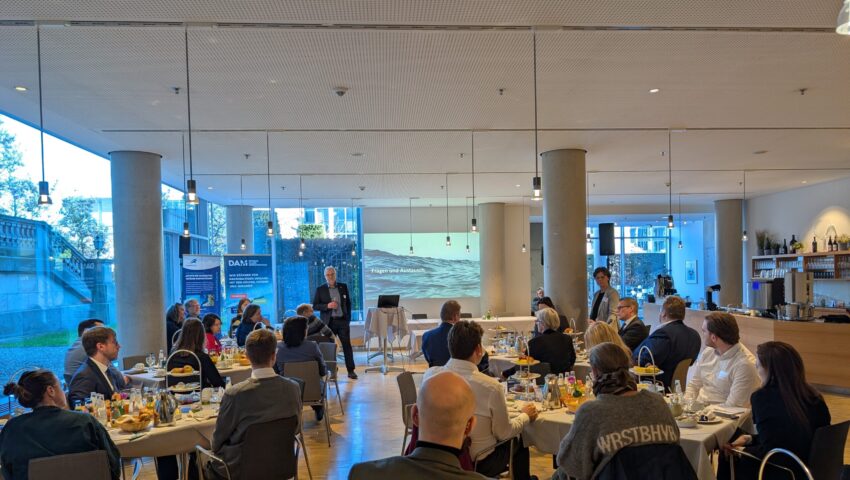
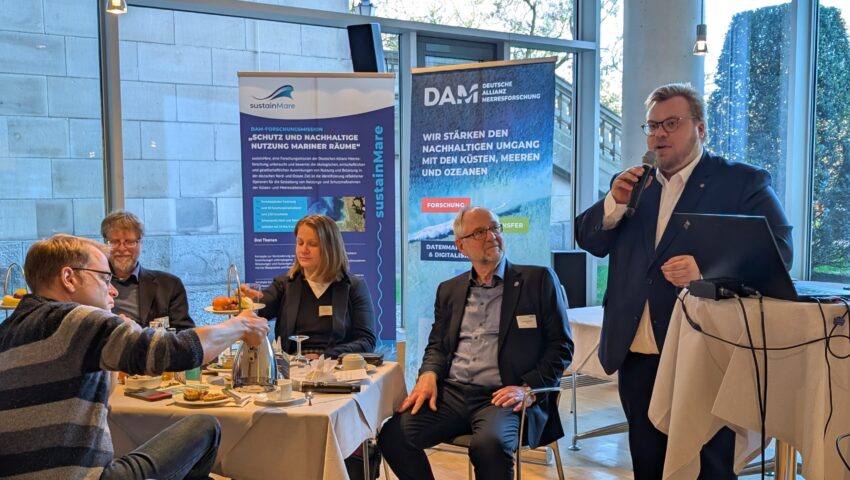
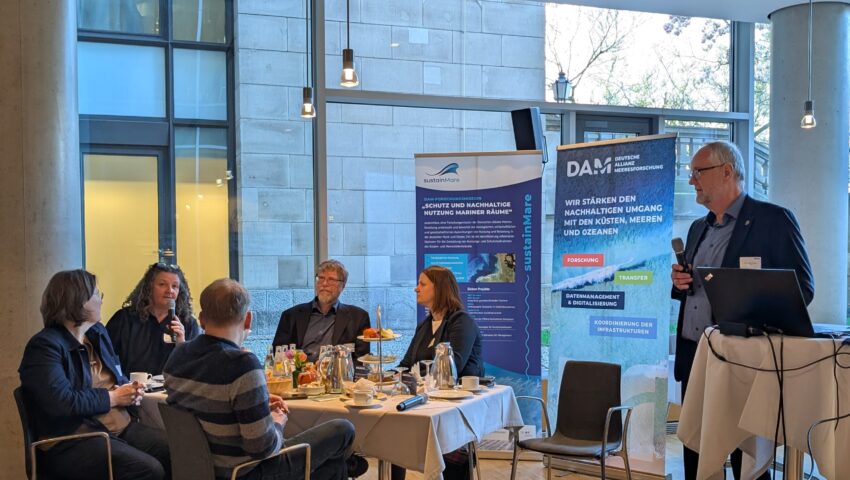
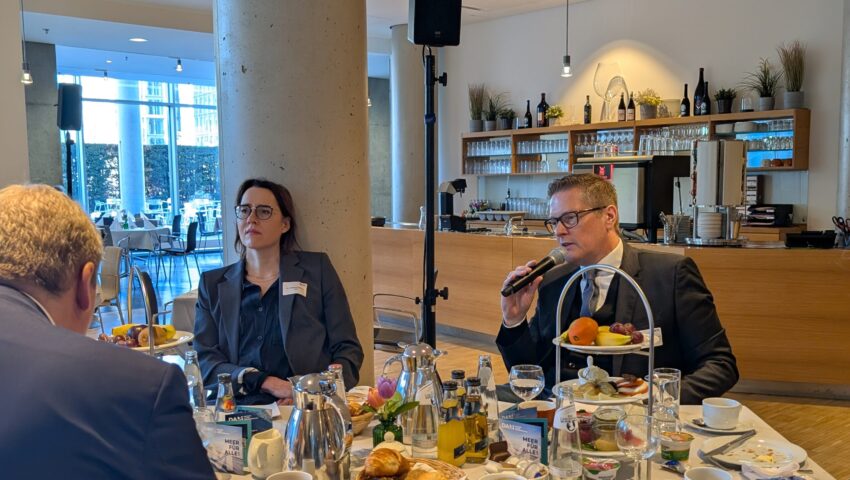
How does offshore wind power affect the marine environment, and how can its planned expansion be made as sustainable as possible? These questions were the focus of a parliamentary breakfast hosted by the German Marine Research Alliance (DAM), the DAM research mission sustainMare, and the Federal Ministry of Research, Technology, and Space (BMFTR) on April 22 at the Jakob-Kaiser-Haus in the German Bundestag in Berlin. More than 30 guests from the worlds of politics, business, foundations, and academia discussed the expansion of offshore wind power in the North Sea and the Baltic Sea, drawing on scientific findings.
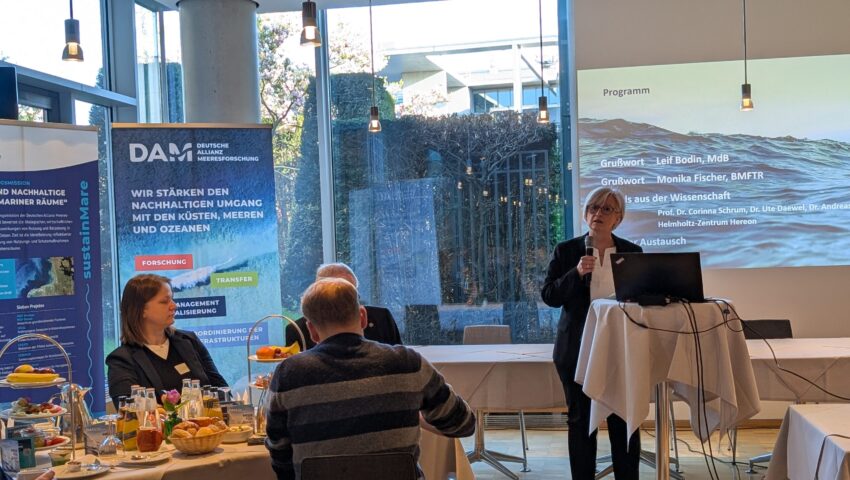
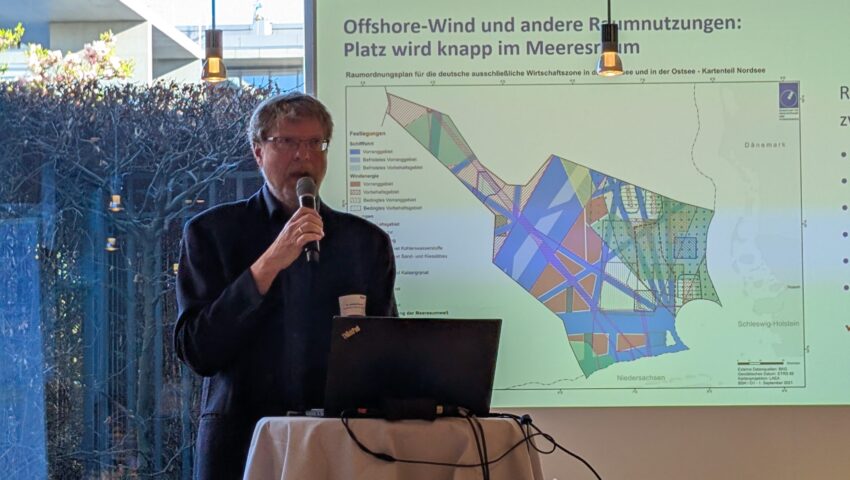
The event opened with a welcome address by Leif Erik Bodin, Member of the German Bundestag and patron of the event. He emphasized that, within the limited space of the North Sea, various interests in its use and marine conservation are increasingly coming into conflict. He noted that developing sustainable solutions requires a robust scientific foundation. Monika Fischer from the Marine, Coastal, and Polar Research Division of the BMFTR also highlighted the importance of coastal and marine research as a strategic research area for the federal government and emphasized the significance of the solution-oriented and transdisciplinary approach of the DAM research mission sustainMare, whose goal is to analyze conflicts of use and develop potential solutions for the sustainable use of the North Sea and the Baltic Sea.
Scientific Presentation: “Offshore Wind Power: The New Challenge for the Marine Ecosystem”
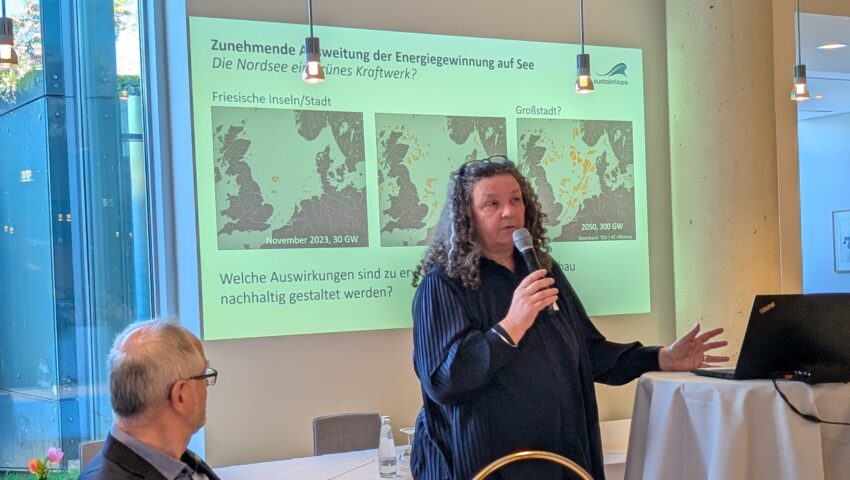
In their scientific keynote presentation, Corinna Schrum, Ute Daewel, and Andreas Kannen from the Helmholtz Center Hereon presented the latest research findings from the DAM research mission sustainMare. They addressed the potential impacts of the planned expansion of offshore wind energy in the North Sea, as well as approaches to ensuring that this expansion is carried out in a sustainable manner.
- Impacts on Wind, Currents, and Sediment Transport
Based on observations and models to date, it can be concluded that the planned expansion of offshore wind power generation will have significant and large-scale impacts on the dynamic conditions in the North Sea. These impacts will lead to significant changes in sediment transport and deposition and will affect the ecosystem. Models can be used to accurately estimate these effects on wind and currents. However, there are still many uncertainties and numerous unanswered questions. - Impacts on the Ecosystem
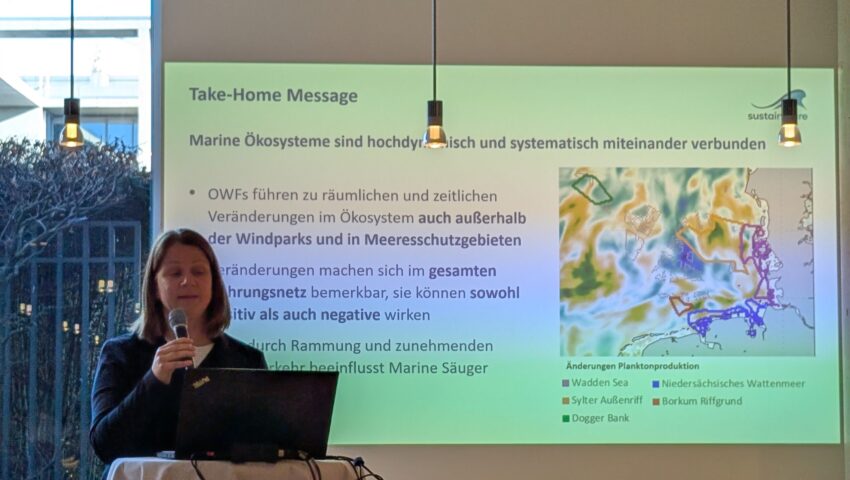
Marine ecosystems are highly dynamic and systematically interconnected. As a result, offshore wind farms cause spatial and temporal changes in the ecosystem, even beyond the wind farms themselves and within marine protected areas. These changes are felt throughout the entire food web. For example, changes in currents and mixing affect nutrient availability and light conditions, and thus the growth of plankton, which serves as the food source for many marine animals. The ecological impacts can be both positive and negative. Negative effects—such as those on marine mammals caused by underwater noise during the construction and operation of the facilities—can be significantly reduced through the use of innovative technologies. - Approaches to an Integrated Maritime Policy
Offshore wind power significantly alters the marine environment, but it is a key component of energy security, energy independence, climate neutrality, as well as technological development and employment. The challenge is to consider nature, the marine environment, and energy policy together, rather than separately by sector. Together, science, industry, and policymakers can develop solutions for the sustainable management of the oceans. To this end, DAM and sustainMare have compiled seven recommendations for a science-based maritime policy (PDF in German).
More information on this topic:
- Further information on offshore wind power is available on the German marine research information portal, “Meere Online.”
- The DAM research mission sustainMare investigates the ecological, economic, and societal impacts of human uses and pressures on marine areas—particularly in the German North Sea and Baltic Sea. The goal is to develop scientifically sound options for conservation and management strategies and thereby support decision-making processes in politics and society. The Coastal Futures project focuses, among other things, on the impacts of offshore wind farms on marine ecosystems.
DAM-Newsletter
Always up to date with the DAM newsletter. (German only)
Our Sponsors
The federal government and the governments of the five northern German states support the current development and sponsor the DAM.